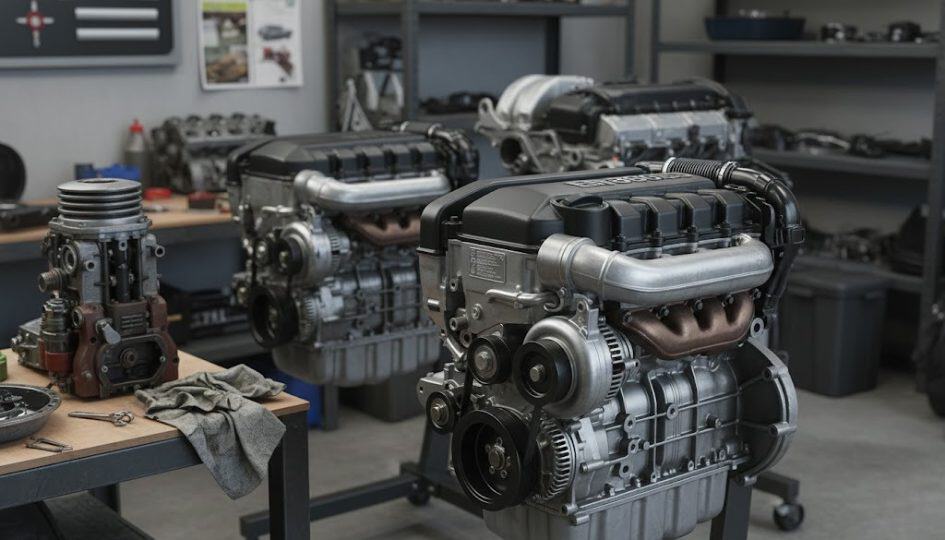
Volkswagen has built its reputation on solid engineering, practical performance, and engines that—when properly maintained—can last for hundreds of thousands of miles. While some VW powerplants have earned criticism over the years, others have become legends for their durability, simplicity, and real-world reliability.
This article focuses entirely on Volkswagen engines, not specific car models. We’ll explore VW’s most reliable engines ever made, typical mileage benchmarks, common issues to watch for, and which engines are best suited for daily drivers versus enthusiasts who value tuning potential and character.
Whether you’re buying used, maintaining a long-term daily, or just curious about Volkswagen’s engineering highlights, this guide breaks it all down.
What Makes a Volkswagen Engine Reliable?
Before diving into specific engines, it’s important to understand what reliability really means in the Volkswagen world.
A reliable VW engine typically features:
- Conservative power output relative to displacement
- Proven internal components
- Simple or well-sorted fuel and ignition systems
- Strong aftermarket and parts availability
- Predictable maintenance requirements
Volkswagen engines that prioritize longevity over peak performance tend to age the best. Many of VW’s most reliable engines were not the most powerful of their era—but they were built to last.
The Legendary VW 1.9 TDI (ALH, AHU, BEW)
Why It’s Reliable
The 1.9-liter TDI diesel is widely regarded as the most reliable engine Volkswagen has ever produced. Designed during a time when durability was prioritized over emissions complexity, these engines are famous for running seemingly forever.
With a cast-iron block, overbuilt internals, and low-revving diesel architecture, the 1.9 TDI thrives on high mileage.
Typical Mileage Benchmarks
- 300,000 miles: Very common
- 400,000+ miles: Not unusual with proper maintenance
- 500,000 miles: Achievable with rebuilt peripherals
Common Issues
- Timing belt service is critical
- EGR clogging over time
- Turbo wear at very high mileage
- Injection pump seals on older versions
Best For
- Daily drivers
- High-mileage commuters
- Owners prioritizing fuel economy and longevity
This engine is less about excitement and more about dependability. For pure reliability, few engines—diesel or gasoline—can match it.
The VW 2.0 Naturally Aspirated (2.0L SOHC)
Why It’s Reliable
Often overlooked due to its modest performance, the 2.0-liter naturally aspirated inline-four is one of Volkswagen’s most durable gasoline engines. It uses simple port fuel injection, minimal electronics, and conservative tuning.
It’s slow—but nearly indestructible.
Typical Mileage Benchmarks
- 200,000 miles: Expected
- 250,000+ miles: Common
- 300,000 miles: Achievable with routine maintenance
Common Issues
- Ignition coil packs
- Valve cover gasket leaks
- Aging sensors
- Timing belt neglect
Best For
- Daily driving
- First-time VW owners
- Low-cost ownership
If your priority is reliability over performance, this engine delivers consistent, predictable ownership with minimal drama.
The VW 1.8T 20-Valve Turbo
Why It’s Reliable (When Maintained Properly)
The 1.8T is one of Volkswagen’s most famous engines—and also one of the most misunderstood. When properly maintained, it is extremely durable. Many reliability complaints stem from poor oil maintenance, not flawed design.
With forged internals in many variants and a robust bottom end, the 1.8T can handle both daily driving and spirited use.
Typical Mileage Benchmarks
- 200,000 miles: Very common
- 250,000+ miles: Achievable
- 300,000 miles: Possible with strict maintenance
Common Issues
- Sludge buildup from neglected oil changes
- Coil pack failures
- PCV system issues
- Vacuum leaks
Best For
- Daily drivers who enjoy turbo torque
- Enthusiasts seeking tuning potential
- Balanced performance and reliability
When serviced with high-quality oil and reasonable intervals, the 1.8T remains one of VW’s most rewarding and reliable engines.
The VW 2.5 Inline-Five
Why It’s Reliable
Volkswagen’s 2.5-liter inline-five is a hidden gem. Featuring a naturally aspirated design, timing chains instead of belts, and a unique firing order, it delivers strong low-end torque and excellent longevity.
Its relative mechanical simplicity makes it one of the most dependable modern VW engines.
Typical Mileage Benchmarks
- 200,000 miles: Routine
- 250,000+ miles: Common
- 300,000 miles: Achievable
Common Issues
- Vacuum pump leaks
- Accessory failures
- Carbon buildup on later versions
Best For
- Daily driving
- Drivers wanting reliability with character
- Long-term ownership
The 2.5 strikes a rare balance between modern refinement and old-school durability.
The VW VR6 (12-Valve and 24-Valve)
Why It’s Reliable
The VR6 engine is one of Volkswagen’s most iconic designs. Its narrow-angle V configuration allows for compact packaging while delivering smooth, torque-rich performance.
Despite its complexity compared to four-cylinder engines, the VR6 has proven remarkably durable.
Typical Mileage Benchmarks
- 200,000 miles: Common
- 250,000+ miles: Well-maintained examples
- 300,000 miles: Possible but maintenance-intensive
Common Issues
- Timing chain wear (especially on older engines)
- Cooling system failures
- Oil consumption with age
Best For
- Enthusiasts
- Performance-oriented daily drivers
- Drivers who value sound and torque
While not the cheapest engine to maintain, the VR6 rewards owners with durability and personality rarely found in modern engines.
The VW 2.0 TDI (Later Generations)
Why It’s Reliable
Later versions of the 2.0 TDI improved significantly over early problematic iterations. With refined fuel systems and improved emissions management, these engines offer excellent torque and long-term durability when properly maintained.
Typical Mileage Benchmarks
- 200,000 miles: Expected
- 250,000+ miles: Common with maintenance
- 300,000 miles: Achievable
Common Issues
- EGR and DPF components
- High-pressure fuel pump concerns
- Sensor failures
Best For
- Daily driving
- Long-distance commuters
- Drivers seeking diesel efficiency
When emissions systems are well-maintained, the 2.0 TDI delivers strong reliability and excellent fuel economy.
Air-Cooled VW Engines (Type 1, Type 4)
Why They’re Reliable
Volkswagen’s classic air-cooled engines are legendary for their simplicity. With minimal moving parts, no coolant system, and easy servicing, they can run reliably for decades when properly maintained.
Typical Mileage Benchmarks
- 100,000 miles: Normal without rebuild
- 150,000+ miles: Possible with careful maintenance
- Unlimited lifespan with periodic rebuilds
Common Issues
- Overheating
- Oil leaks
- Valve adjustment requirements
Best For
- Enthusiasts
- Classic VW owners
- DIY mechanics
While not modern by any standard, air-cooled engines remain symbols of mechanical reliability and simplicity.
Daily Driving vs Enthusiast Ownership
Best Volkswagen Engines for Daily Driving
- 1.9 TDI
- 2.0 Naturally Aspirated
- 2.5 Inline-Five
- 2.0 TDI (later versions)
These engines prioritize longevity, low maintenance costs, and predictable ownership.
Best Volkswagen Engines for Enthusiasts
- 1.8T
- VR6
- Air-cooled engines
These engines offer tuning potential, sound, or driving character while still maintaining respectable reliability when properly cared for.
Maintenance:
No Volkswagen engine is immune to neglect. Even the most reliable engines require:
- Regular oil changes with correct specifications
- Timely timing belt or chain inspections
- Cooling system maintenance
- Prompt attention to warning signs
Engines that fail prematurely often do so because of missed maintenance, not flawed engineering.
Final Thoughts
Volkswagen has produced a wide range of engines over the decades—some better than others—but the engines listed here represent the best of VW reliability. From the indestructible 1.9 TDI to the character-rich VR6 and the underrated 2.5 inline-five, these powerplants prove that Volkswagen knows how to build engines that stand the test of time.
If reliability is your top priority, choose simplicity, maintain it religiously, and avoid unnecessary stress. Do that, and many Volkswagen engines will reward you with hundreds of thousands of dependable miles.
When cared for properly, these engines aren’t just reliable—they’re legendary.
Recent Comments